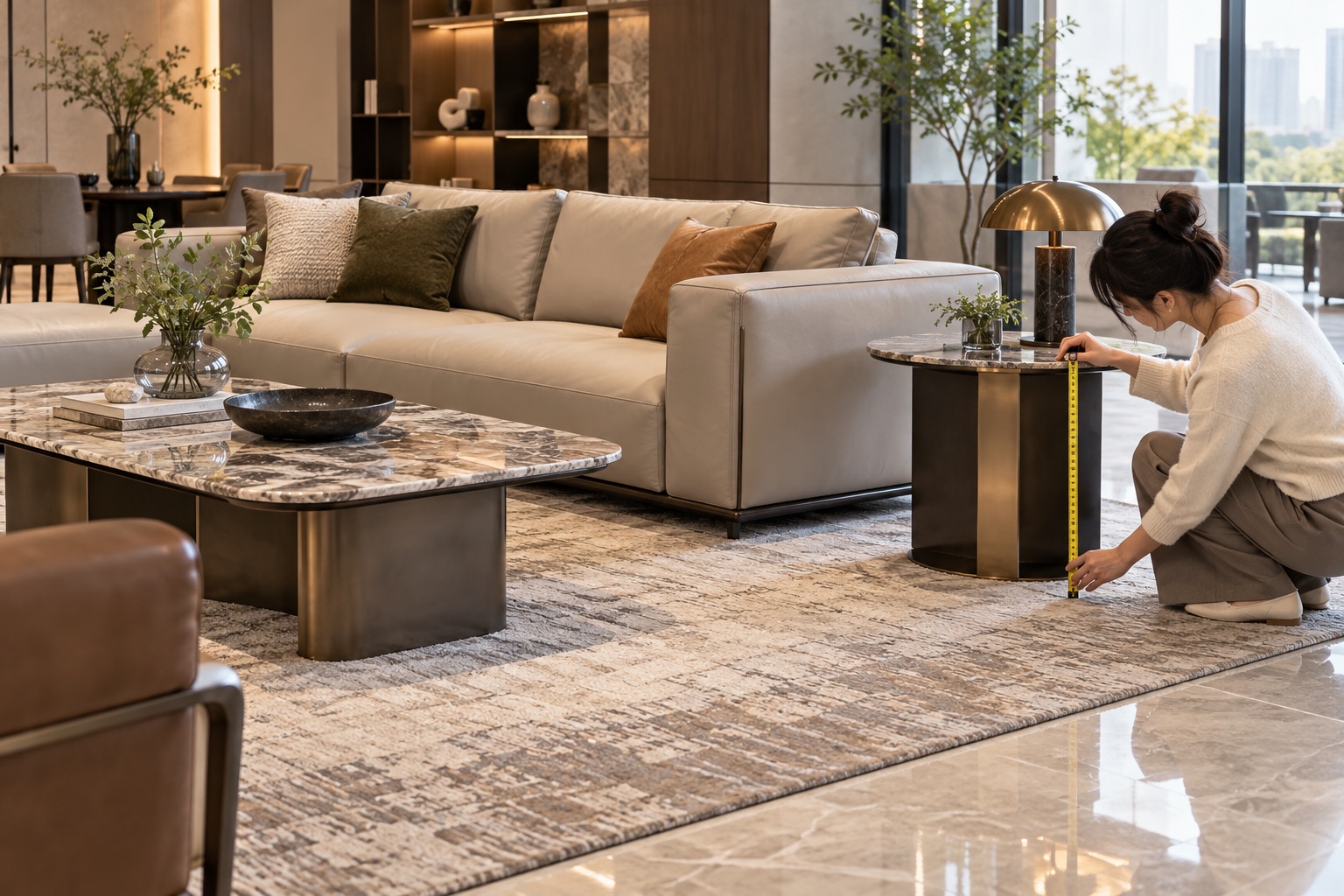
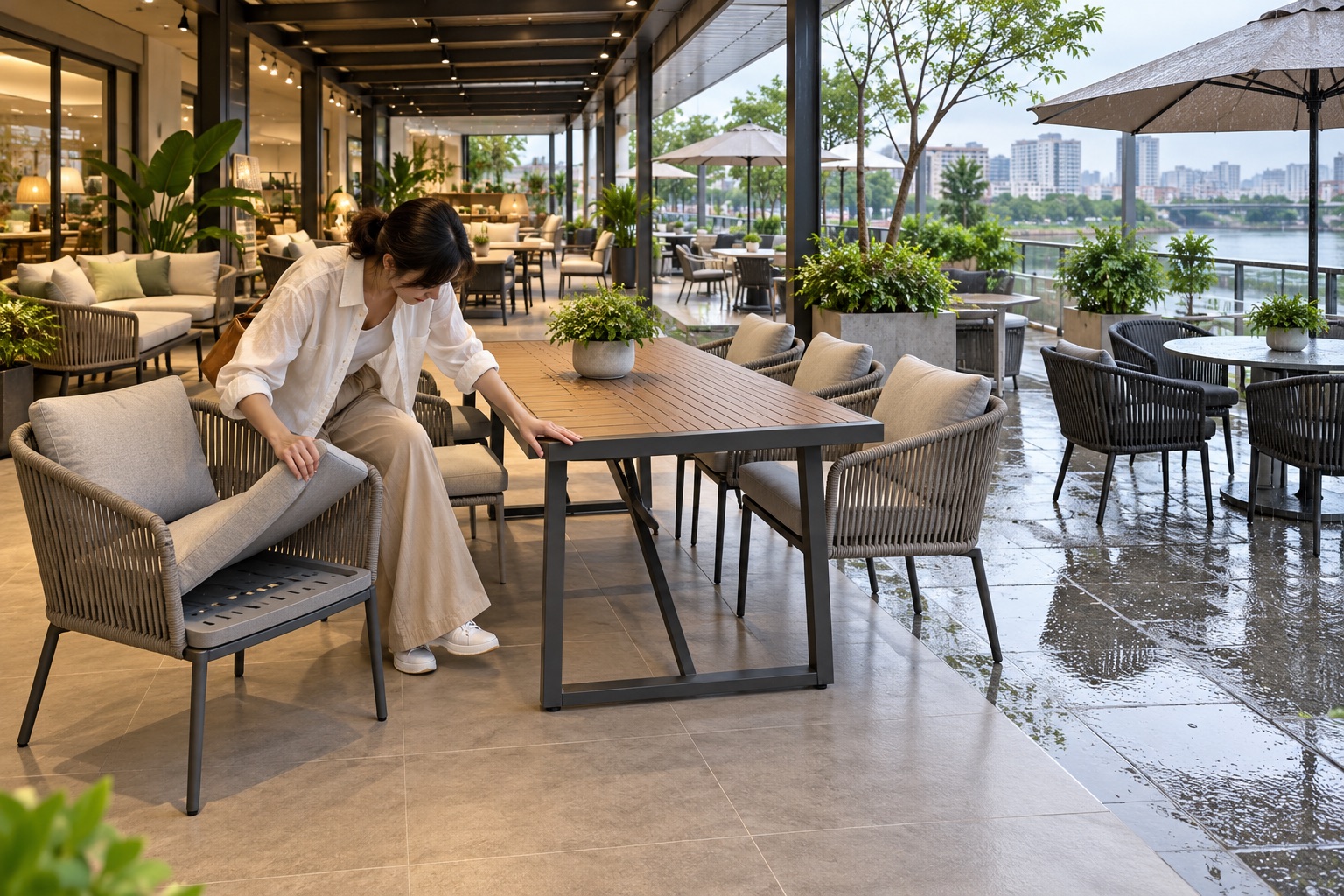
Lecong Dining Table and Chair Buying Guide
Choose dining sets through seating count, circulation, table-chair height, top material, base stability, chair comfort and packing.
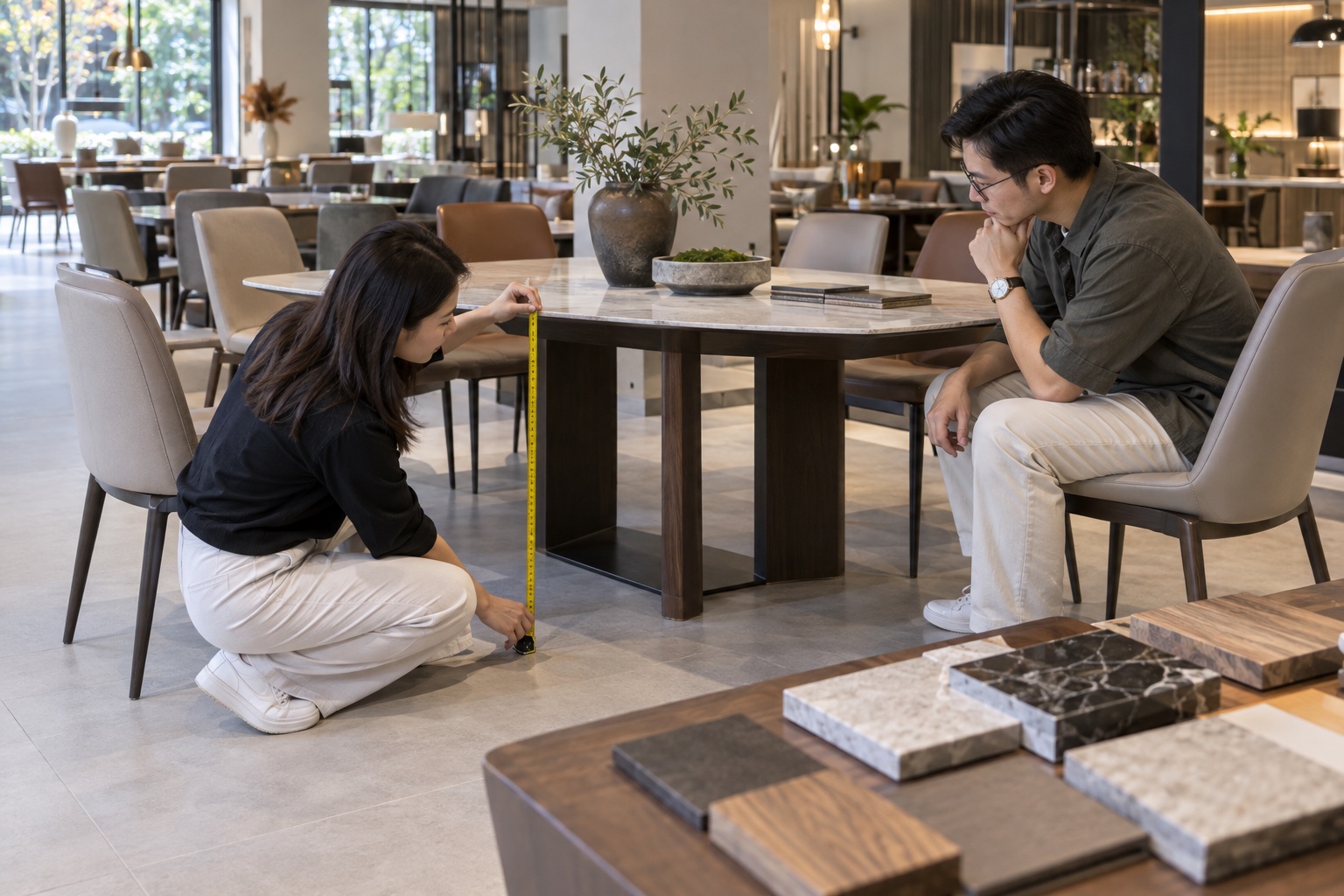
A dining table and chairs should be selected as one use system. Start with seating and room circulation, then check table height, under-top clearance, chair seat and arm height, legroom, base stability, top maintenance and handling route so individually attractive pieces also work together.
Scope of this guide
This guide provides an execution framework for furniture sourcing and product selection. Contract, inspection, freight, installation and destination-country requirements should be confirmed in writing by the relevant supplier or professional adviser.
Set the decision standard first
- Set tabletop size from people and space
- Check the table-chair height relationship
- Assess tabletop material and edge
- Check base and chair stability
What to define and retain
| Selection question | What to compare |
|---|---|
| Set tabletop size from people and space | Compare shape, length, width, seat allocation and circulation for daily and extended use |
| Check the table-chair height relationship | Measure table height, under-top clearance, seat and arm height, seat depth and legroom |
| Assess tabletop material and edge | Compare stain and heat-use needs, joints, edge profile, weight, natural variation and maintenance |
| Check base and chair stability | Observe load path, rocking, floor contact, chair back and joints using an agreed verification method |
| Confirm the set version and packing | Freeze colours, materials, quantity, floor glides, disassembly, package dimensions and handling orientation |
Recommended workflow
- Set tabletop size from people and space: Compare shape, length, width, seat allocation and circulation for daily and extended use
- Check the table-chair height relationship: Measure table height, under-top clearance, seat and arm height, seat depth and legroom
- Assess tabletop material and edge: Compare stain and heat-use needs, joints, edge profile, weight, natural variation and maintenance
- Check base and chair stability: Observe load path, rocking, floor contact, chair back and joints using an agreed verification method
- Confirm the set version and packing: Freeze colours, materials, quantity, floor glides, disassembly, package dimensions and handling orientation
At every step, retain the product ID, version, date, owner and written confirmation so critical decisions do not remain only in chats or verbal discussions.
Common execution problems
- If this is not defined in writing: Set tabletop size from people and space — Compare shape, length, width, seat allocation and circulation for daily and extended use
- If this is not defined in writing: Check the table-chair height relationship — Measure table height, under-top clearance, seat and arm height, seat depth and legroom
- If this is not defined in writing: Assess tabletop material and edge — Compare stain and heat-use needs, joints, edge profile, weight, natural variation and maintenance
Execution checklist
- Confirmed and retained: Check the table-chair height relationship
- Confirmed and retained: Assess tabletop material and edge
- Confirmed and retained: Check base and chair stability
- Confirmed and retained: Confirm the set version and packing
Related guides on this site
- Lecong Sofa Buying Guide: Size, Comfort, Upholstery and Structure
- Lecong Bed and Mattress Buying Guide: Size, Support and Access
- Lecong Storage Cabinet Buying Guide: Capacity, Doors and Safety
Frequently asked questions
Do chairs match if they simply fit around the table?
Also check seat height, arm height, under-table clearance, legroom, chair width and circulation when pulled out.
Will natural stone or wood tops vary in appearance?
Natural pattern and colour may vary; agree an acceptable range through samples, slabs or item photographs.
Validate the table and chairs together in the real use scenario
For project-specific execution, prepare the destination country, room list, quantities, critical dimensions, material preferences, budget direction and target timing, then use the contact section on this site.