Lecong Storage Cabinet Buying Guide: Capacity, Doors and Safety
Choose cabinets from item list, external size, internal clearance, door and drawer movement, shelf loading, fixing, ventilation and packing.
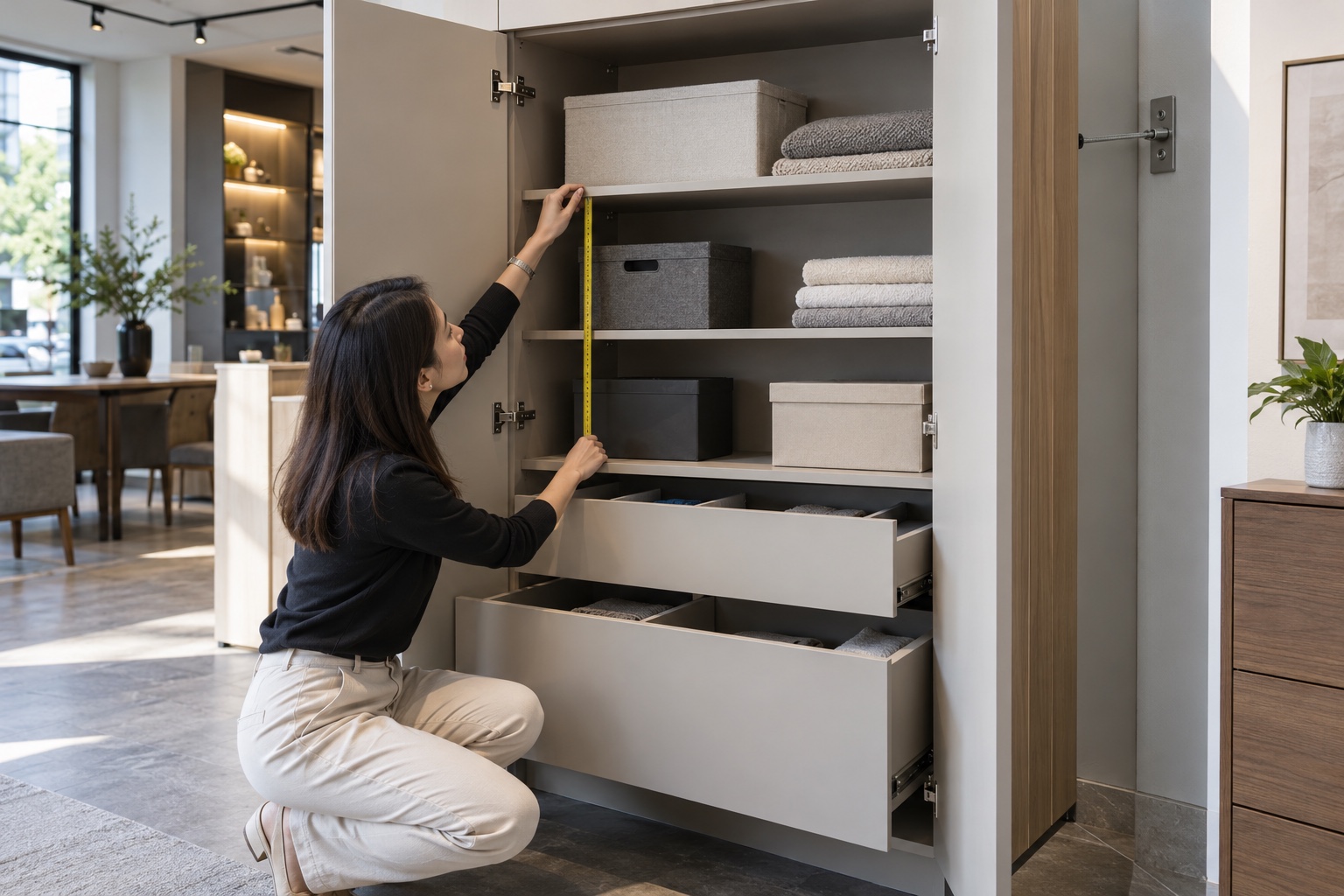
A storage cabinet’s useful capacity depends on internal clear dimensions, not how large it looks outside. Work backwards from the items to be stored, then check shelves, hanging, drawers and opening space, as well as stability, anti-tip or fixing conditions, ventilation, site obstructions, disassembly and handling.
Scope of this guide
This guide provides an execution framework for furniture sourcing and product selection. Contract, inspection, freight, installation and destination-country requirements should be confirmed in writing by the relevant supplier or professional adviser.
Set the decision standard first
- Define the interior from an item list
- Measure external and internal dimensions
- Check door and drawer movement
- Assess stability and fixing conditions
What to define and retain
| Selection question | What to compare |
|---|---|
| Define the interior from an item list | Use clothing, tableware, files, equipment or general storage to set hanging, shelves, drawers and adjustment |
| Measure external and internal dimensions | Record overall size, clear interior, shelf thickness, hinge intrusion and usable drawer space |
| Check door and drawer movement | Simulate full opening, pull-out, nearby furniture, corners, trims, handles and standing space |
| Assess stability and fixing conditions | Review base, centre of gravity, full-load change, anti-tip, wall fixing and child-use requirements |
| Confirm site fit and packing | Check skirting, sockets, ventilation, floor level, largest part, access and installation sequence |
Recommended workflow
- Define the interior from an item list: Use clothing, tableware, files, equipment or general storage to set hanging, shelves, drawers and adjustment
- Measure external and internal dimensions: Record overall size, clear interior, shelf thickness, hinge intrusion and usable drawer space
- Check door and drawer movement: Simulate full opening, pull-out, nearby furniture, corners, trims, handles and standing space
- Assess stability and fixing conditions: Review base, centre of gravity, full-load change, anti-tip, wall fixing and child-use requirements
- Confirm site fit and packing: Check skirting, sockets, ventilation, floor level, largest part, access and installation sequence
At every step, retain the product ID, version, date, owner and written confirmation so critical decisions do not remain only in chats or verbal discussions.
Common execution problems
- If this is not defined in writing: Define the interior from an item list — Use clothing, tableware, files, equipment or general storage to set hanging, shelves, drawers and adjustment
- If this is not defined in writing: Measure external and internal dimensions — Record overall size, clear interior, shelf thickness, hinge intrusion and usable drawer space
- If this is not defined in writing: Check door and drawer movement — Simulate full opening, pull-out, nearby furniture, corners, trims, handles and standing space
Execution checklist
- Confirmed and retained: Measure external and internal dimensions
- Confirmed and retained: Check door and drawer movement
- Confirmed and retained: Assess stability and fixing conditions
- Confirmed and retained: Confirm site fit and packing
Related guides on this site
- Lecong Sofa Buying Guide: Size, Comfort, Upholstery and Structure
- Lecong Dining Table and Chair Buying Guide
- Lecong Bed and Mattress Buying Guide: Size, Support and Access
Frequently asked questions
Does a large outside cabinet always provide enough internal space?
No. Backs, hinges, drawer structures, shelves and partitions reduce usable capacity.
Must every tall cabinet be fixed to the wall?
Assess product design, centre of gravity, use environment and local safety requirements with the supplier and installation professional.
List what must be stored before choosing the cabinet exterior and interior
For project-specific execution, prepare the destination country, room list, quantities, critical dimensions, material preferences, budget direction and target timing, then use the contact section on this site.